Case Study

Case study image

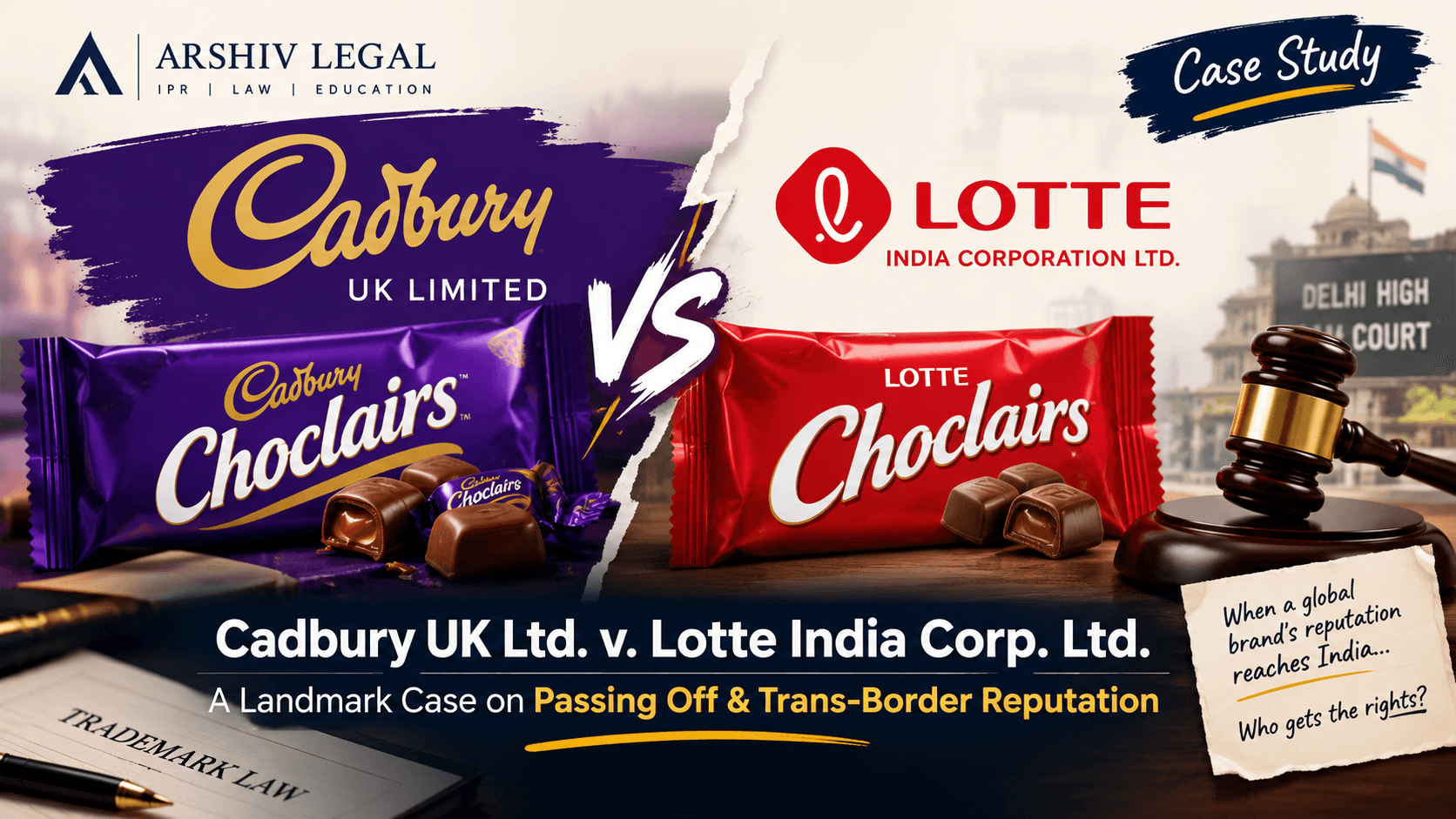
Cadbury UK Limited & Anr. v. Lotte India Corporation Ltd. (2014)
This case concerned a dispute between Cadbury UK Limited and Cadbury India Limited, on one side, and Lotte India Corporation Ltd., on the other, over the trademark “Choclairs”, used for confectionery products. Cadbury claimed that the mark had a long-standing international reputation and that Lotte's use of “Lotte Choclairs” could mislead consumers. Lotte argued that its predecessor, Parrys Confectionery, had used the mark in India earlier. The Delhi High Court examined whether Cadbury's international reputation had extended to India and whether Lotte had established earlier, continuous use of the disputed mark. The Court continued the interim injunction restraining Lotte from using the disputed marks during the pendency of the suit. The case is important because it explains that an international trademark may receive protection in India through the law of passing off if the claimant establishes a sufficient reputation among Indian consumers, even without Indian registration of that mark.

Trademark • Court: High Court of Delhi, New Delhi Judge: Justice S. MuralidharRead More →
Case study image

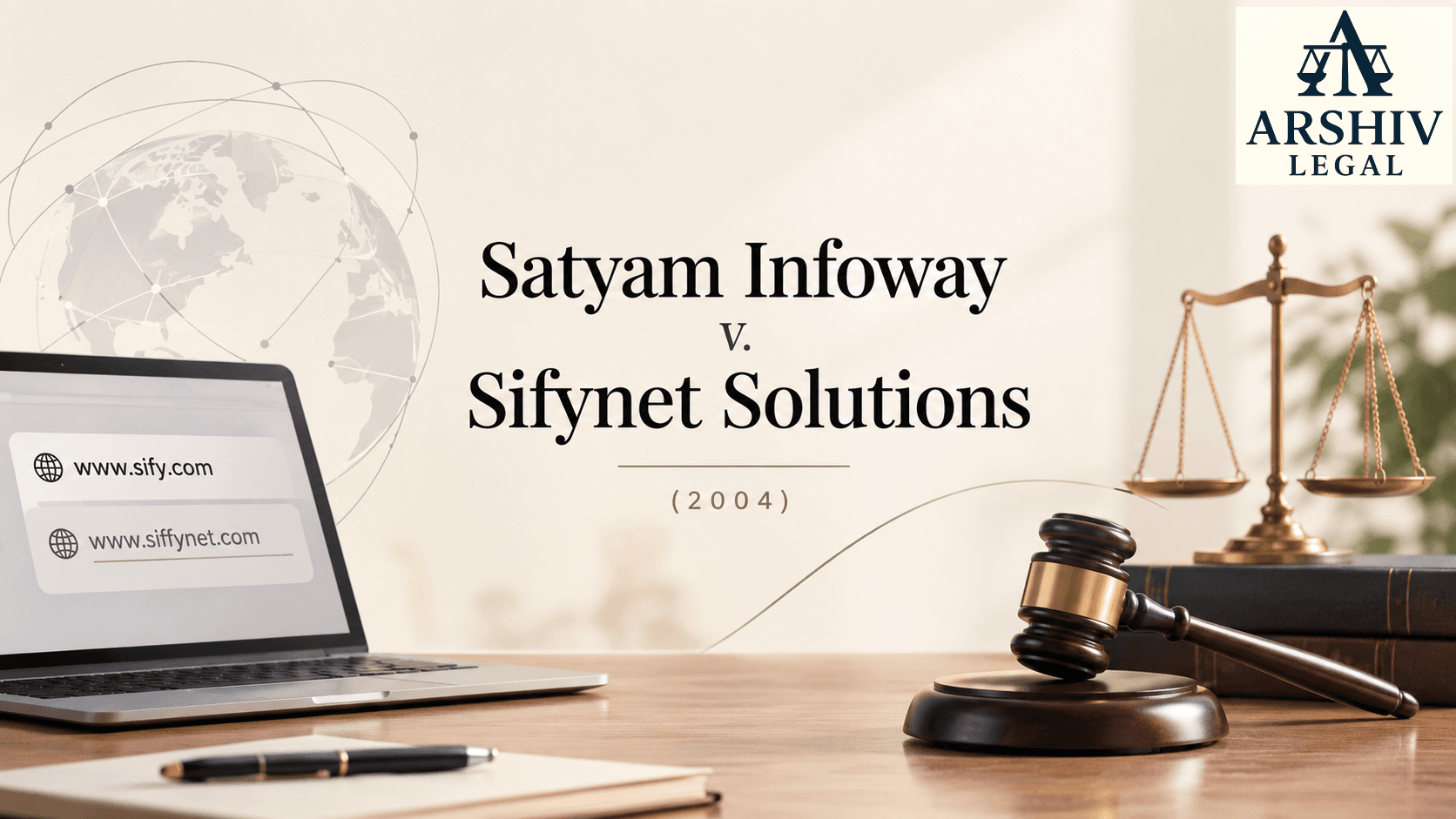
Satyam Infoway Ltd. v. Siffynet Solutions Pvt. Ltd. (2004)
Short Overview Satyam Infoway Ltd. v. Siffynet Solutions Pvt. Ltd. (2004) is an important Supreme Court of India decision concerning the legal protection of internet domain names. Satyam Infoway was using the name “Sify” in connection with its internet-related business and had registered domain names incorporating that name. Sifynet Solutions later used domain names containing the similar word “Siffy”. Satyam Infoway argued that the similarity could confuse internet users and divert customers. The dispute reached the Supreme Court after the High Court interfered with the temporary injunction granted by the trial court. The Supreme Court held that domain names can possess characteristics of trademarks and that the principles of passing off can apply to domain-name disputes. The Court restored the trial court's temporary injunction in favour of Satyam Infoway. Key significance: The case demonstrates how trademark-related legal principles can protect business identity in the online environment, even where the dispute concerns domain names rather than a conventional physical business name.

Trademark • Supreme Court of India / Civil appellate jurisdictionRead More →
Case study image

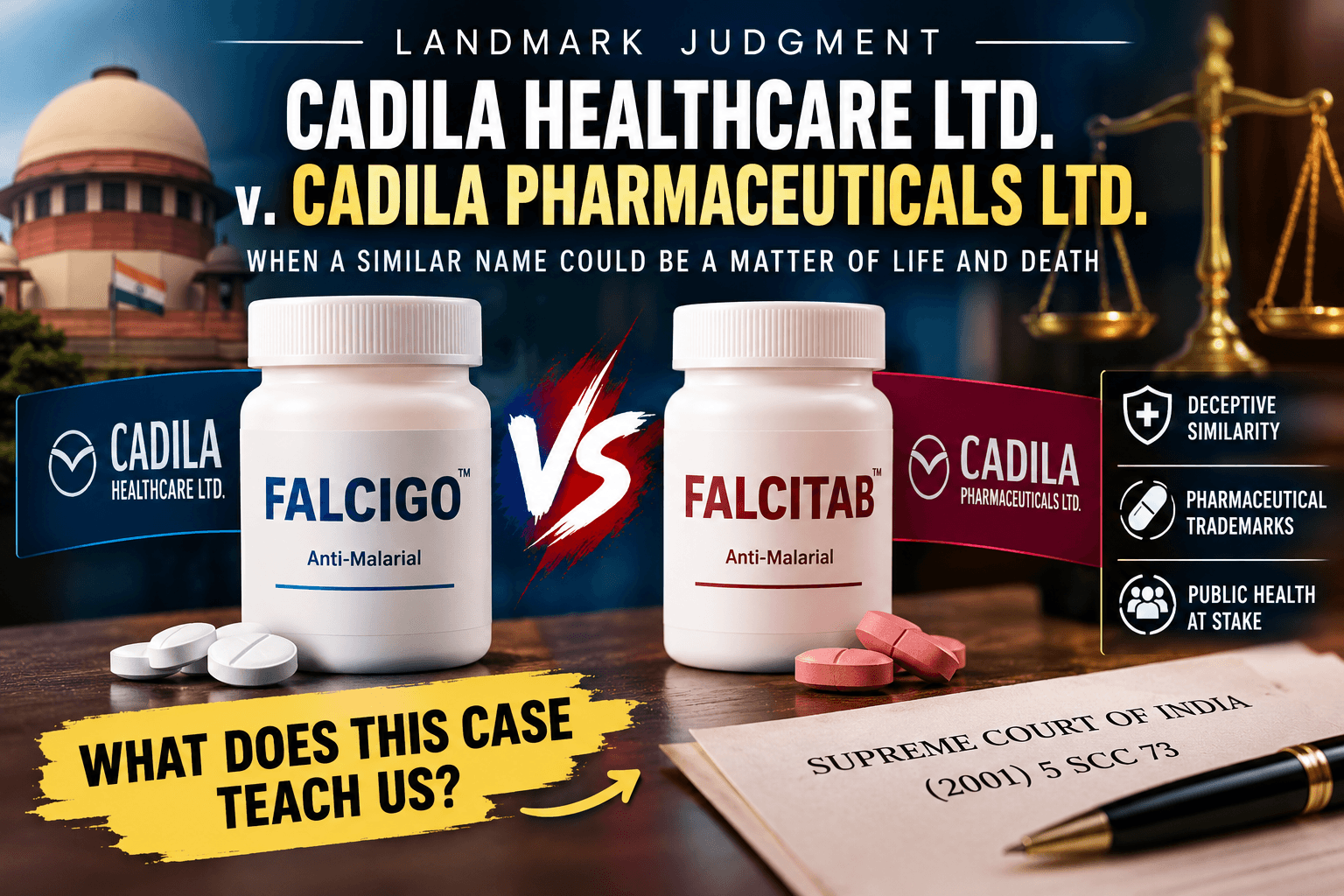
Cadila Healthcare Ltd. v. Cadila Pharmaceuticals Ltd. Citation: (2001) 5 SCC 73 Subject: Trademark Law | Passing Off | Deceptive Similarity | Pharmaceutical Trademarks
Short Overview Cadila Healthcare Ltd. v. Cadila Pharmaceuticals Ltd. is a landmark Supreme Court judgment concerning passing off and deceptive similarity between pharmaceutical trademarks. Cadila Healthcare Ltd. was marketing an anti-malarial medicine under the trademark "FALCIGO", while Cadila Pharmaceuticals Ltd. subsequently marketed another anti-malarial medicine under the trademark "FALCITAB". Cadila Healthcare alleged that the two marks were deceptively similar and that the use of "FALCITAB" could cause confusion with "FALCIGO", particularly because both medicines were used for the treatment of Falciparum malaria. The Supreme Court emphasised that trademark disputes involving medicines require a stricter approach because confusion between medicinal products can have serious consequences for public health. The Court laid down important factors for determining deceptive similarity, including the nature of the marks, phonetic similarity, nature of goods, class of purchasers, purchasing method and other surrounding circumstances. Although the Supreme Court did not finally decide the merits of the passing-off dispute at that stage, it laid down principles that have become highly influential in pharmaceutical trademark disputes.

Trademark • Court: Supreme Court of India Jurisdiction: Civil Appellate JurisdictionRead More →
Case study image

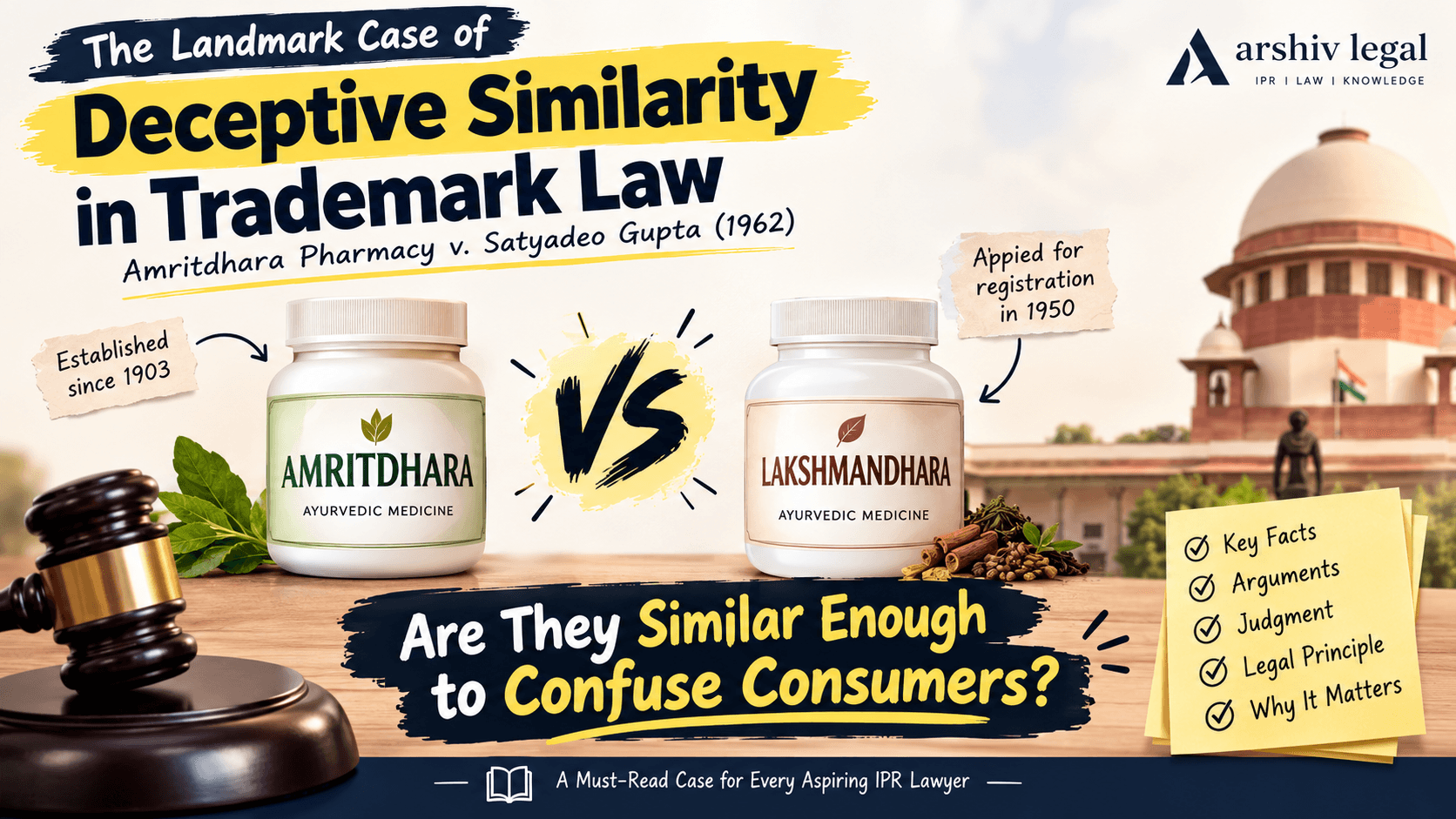
Amritdhara Pharmacy v. Satyadeo Gupta (1962)

This landmark trademark case explains how courts determine whether two brand names are confusingly similar. The dispute was between “Amritdhara” and “Lakshmandhara,” two names used for similar medicinal products. The Supreme Court held that trademark similarity must be assessed by looking at the marks as a whole and considering how an ordinary consumer with imperfect memory might perceive them.

Trademark • Supreme Court of IndiaRead More →

Frequently Asked Questions

Find answers to common questions about Intellectual Property Law, our legal services, and the educational resources available on this platform.

Still have a questions?

Can't find the answer to your question? Send us an email and we'll get back to you as soon as possible!

Send email

Intellectual Property (IP) refers to creations of the mind, such as inventions, literary and artistic works, designs, symbols, names, and images used in commerce. It is legally protected by patents, trademarks, and copyright.

Trademarks protect brand names, logos, and slogans. Patents protect new inventions and technical processes. Copyright protects original creative expressions such as writing, software code, music, and artworks.

Any individual, business, startup, NGO, or legal entity claiming to be the proprietor of a trademark used or proposed to be used can apply for registration.

In India, a trademark application generally takes between 6 to 12 months to complete registration if there are no objections or oppositions filed.

Yes, you can reach out through our contact page or schedule an advisory session directly to discuss your specific IP, filing, or dispute requirements.

Most of our curated legal notes, landmark summaries, and educational guides are freely available for students, researchers, and legal enthusiasts.